Nigeria is currently facing a unique “graduate paradox.” Every year, thousands of ambitious young people enter the workforce, yet industries continue to struggle to fill critical roles. The reason? A significant disconnect between what is taught in lecture halls and what is required in the professional world.
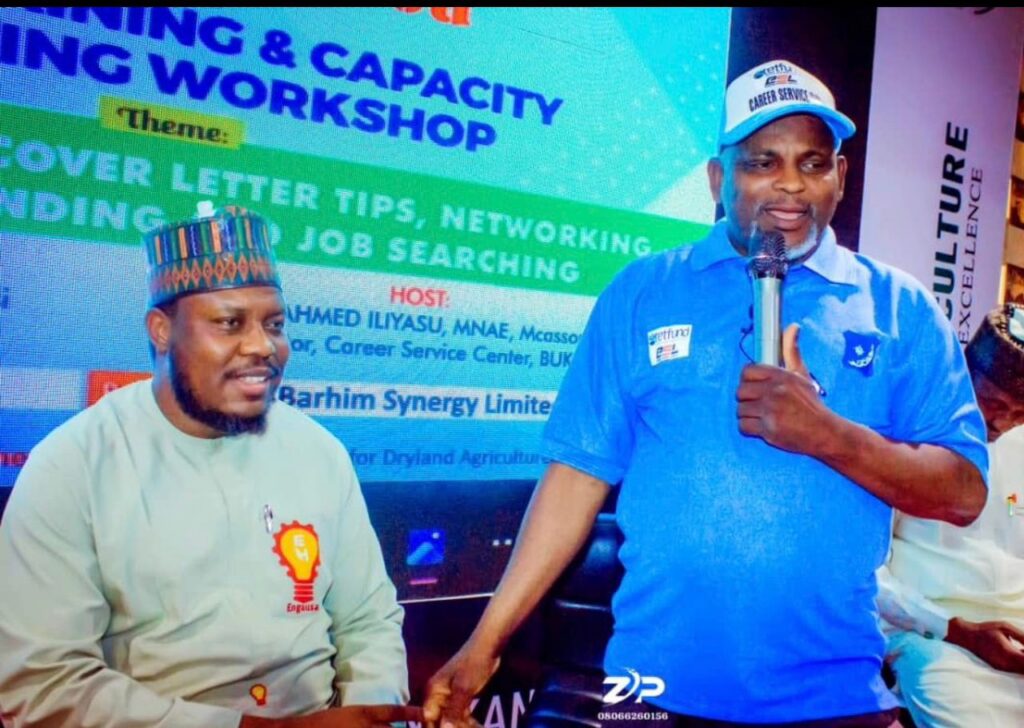
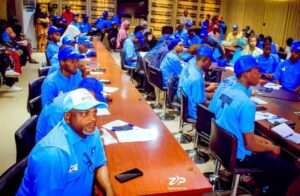
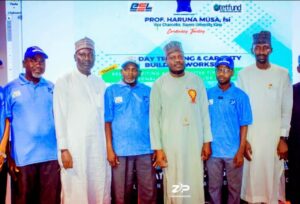
At a recent 2-day capacity-building workshop on graduate employability, held on 10th March 2026 at the BUK Career Services Center, under the leadership of Prof. Ahmad Iliyas, industry leaders and educators gathered to unpack how students can transform themselves from job seekers into high-value professionals and even job creators.
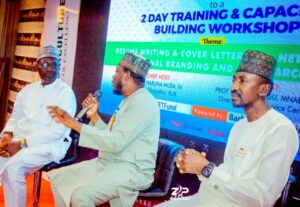
The panel featured Engr. Mustapha Habu (CEO, ENGAUSA HUB), Dr. Kabiru Sufi (Director, SUFI MART), and Dr. Muaz H. Muaz (Lecturer, Dangote Business School), and was moderated by Prof. Murtala Badamasi. This engagement reflects a growing recognition that solving the employability crisis requires multi-stakeholder collaboration bringing together academia, industry, and policy actors.
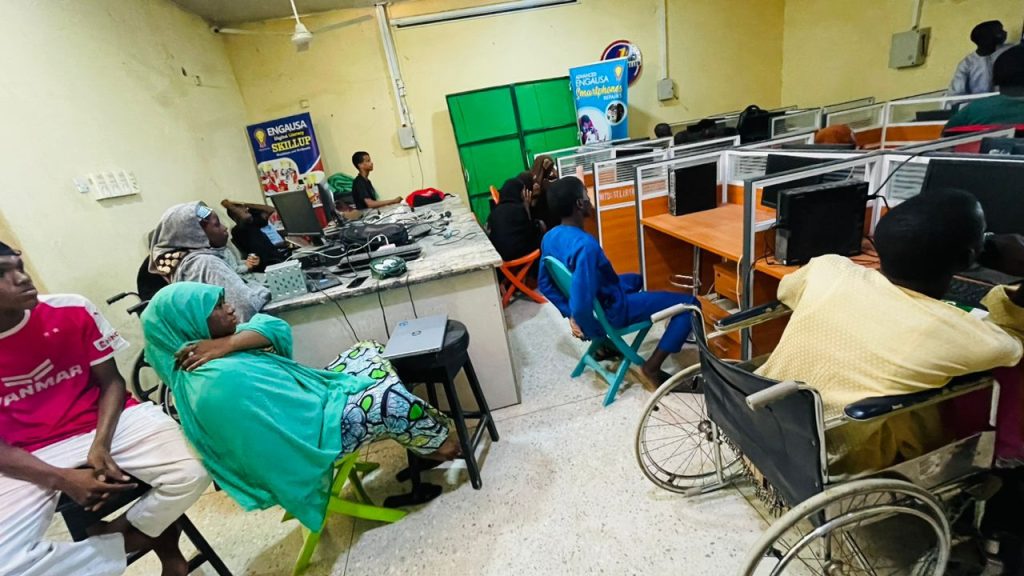
Beyond discussions, ENGAUSA HUB is actively addressing this gap by creating an inclusive platform that breaks barriers of language, age, gender exclusion, social status, and disability, while also tackling education poverty and systemic gaps that lead to skills mismatch in the industry.
1. The Power of Self-Discovery One of the most resonant insights from the session is that a university degree is only the starting point. The labour market rewards
value creation, not just certification.
•Beyond the Classroom: Engage in extracurricular activities, internships, and real-world problem-solving while still a student
•Identify Your Niche: Ask yourself: “What problem can I solve in my environment?”
•Think Like a Creator: Shift from job-seeking to solution-providing
2. Digital Literacy, Digital Skills & AI Readiness Participants explored the growing importance of digital awareness and responsibility:
•Digital Citizenship: Ethical and responsible use of technology
•Digital Presence: Building a professional online identity
•Digital Footprints: Understanding the long-term impact of online activities
A key distinction was emphasized: Using a smartphone is not the same as having marketable digital skills. Graduates must move from consuming content to creating value, by developing skills such as:
•Graphic design
•Video editing
•Digital marketing
•Programming and AI-related competencies
These skills enable freelancing, entrepreneurship, and global opportunities.
3. The 3C’s Framework for Employability Sustainable career growth depends on the balance of:
a. Competence – Practical, job-relevant skills
b. Confidence – The ability to present and apply those skills
c. Character – Integrity, discipline, and professionalism
This aligns with workplace expectations where skills may get you hired, but character keeps you employed.
4. Innovation Through Inclusion (The ENGAUSA Model): A key highlight of the workshop was the ENGAUSA approach, which demonstrates that: Talent is universal, but opportunity is not.
Through language inclusion and hands-on learning, ENGAUSA has:
•Empowered women to become tech entrepreneurs
•Enabled persons with disabilities to become skilled programmers
•Localised technology education, proving that innovation is not foreign but accessible
This model bridges the gap between education and employability by making learning practical, inclusive, and scalable.
5. Workplace Readiness: Beyond Theory Students were introduced to real-world expectations, including:
•Problem-solving and critical thinking
•Professional communication
•Adaptability and discipline
Additionally, emphasis was placed on:
•Volunteerism as a pathway to experience and networking
•Early acquisition of vocational skills before graduation
6. Building Stronger Education–Industry Linkages : A clarion call was made for universities to:
•Strengthen relationships with their graduates
•Build long-term mentorship and career support systems
•Create a win-win ecosystem between institutions and alumni
7. PPP and the Triple Helix Model: The discussion reinforced that employability cannot be solved in isolation.
•Public-Private Partnerships (PPP) enable resource sharing and innovation
•The Triple Helix Model (University–Industry–Government collaboration) provides a framework for aligning education with market
needs.
This ecosystem approach ensures sustainable and scalable impact.
8. Final Insight: Commercialise Your Knowledge: Graduates were challenged to rethink their academic journey:
Your final-year project should not just earn you a degree—it should solve a problem.
By aligning research with real-world needs, students can:
•Turn projects into businesses
•Create intellectual property
•Become job creators instead of job seekers
The Bottom Line: Employability today is not just about getting a job—it is about the ability to:
•Gain employment
•Sustain it
•Grow within it
Through initiatives like this, ENGAUSA continues to:
•Reduce the employability gap
•Prepare job-ready graduates
•Support national development through skills
🗣 Voices from the Session
Participants described the workshop as:
•Their first exposure to real workplace expectations
•A practical guide to career development
•A transformative experience that reshaped their mindset
Conclusion
The Graduate Employability Skills Workshop at Bayero University Kano stands as a powerful example of how strategic
collaboration can transform graduate outcomes.
At ENGAUSA HUB, the message remains clear:
“Beyond certificates lies competence. Beyond knowledge lies skill. And beyond skill lies opportunity.”
🎥 Watch the panel discussion here:
#CareerGuidance #career #mentorship #mentoring
#BeyondCertificates
#ENGAUSA
#SkillsMatter
#CompetenceOverCredentials
#SkillBasedEducation
#Employability
#GraduateSuccess
#SkillsOverCertificates
#FutureOfWork
#CareerDevelopment
#JobReadiness
#YouthEmpowerment