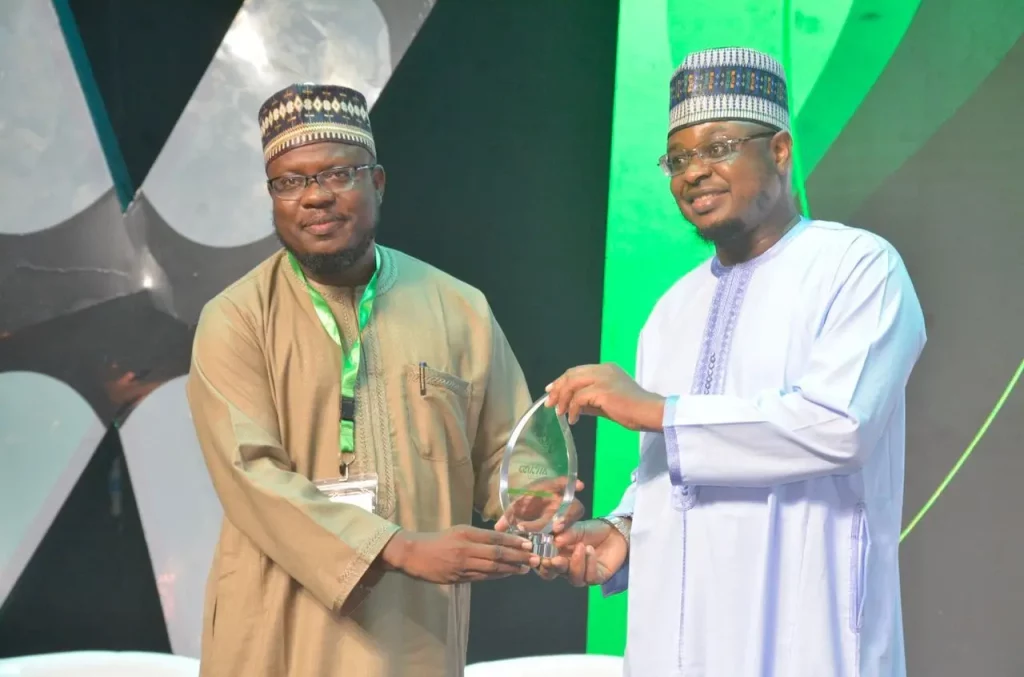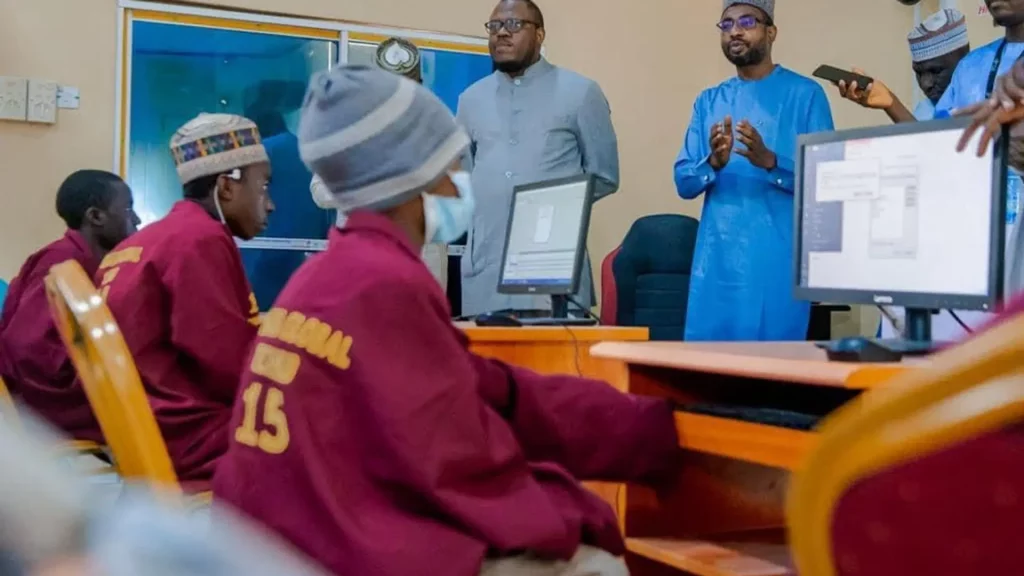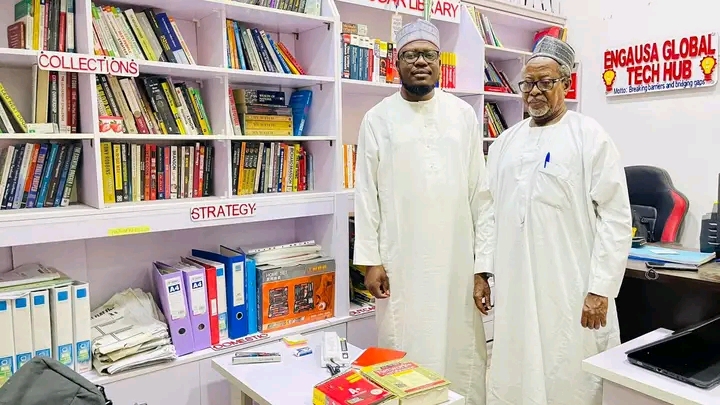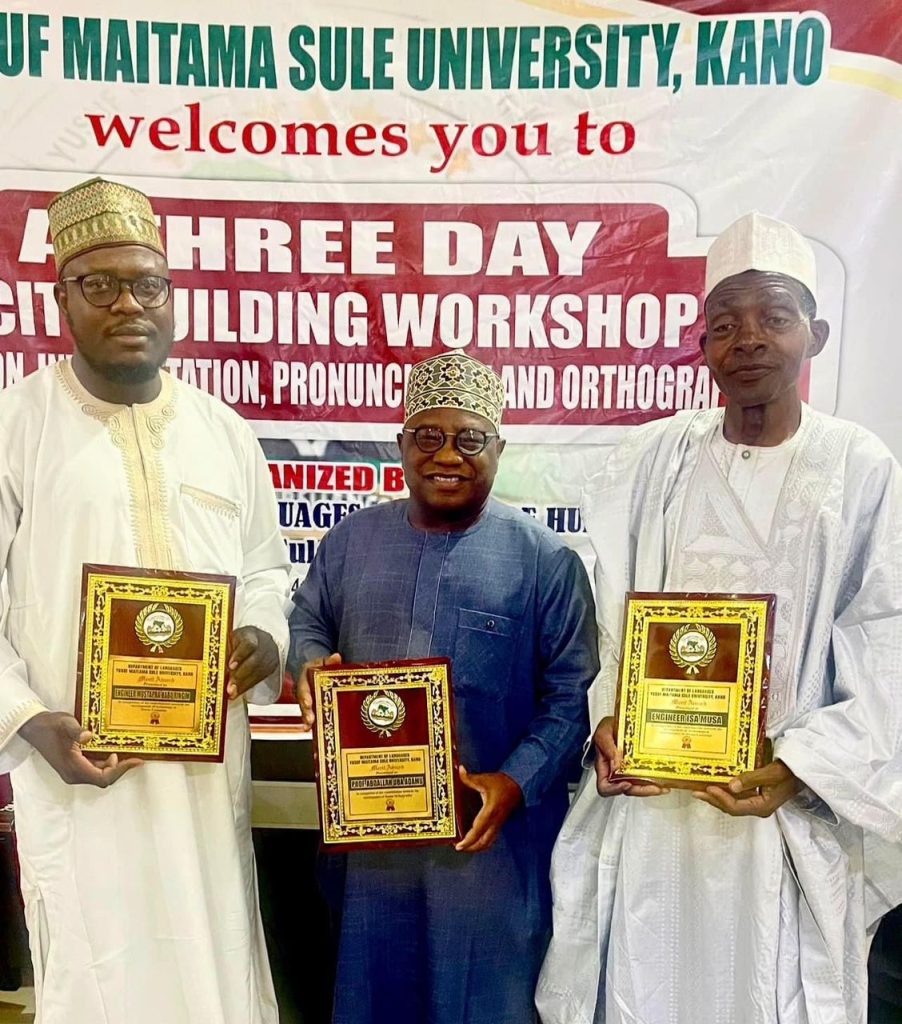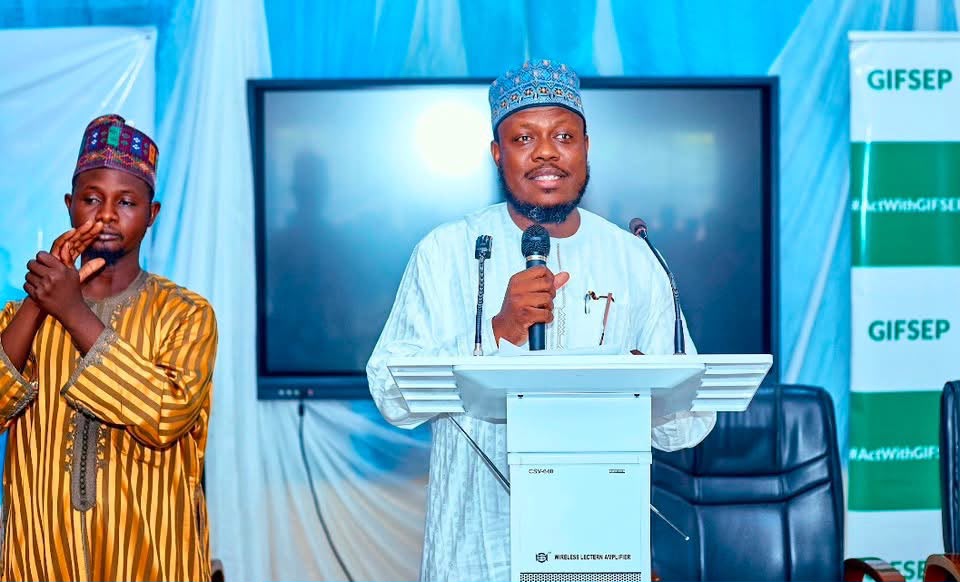
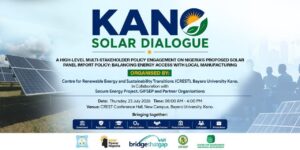
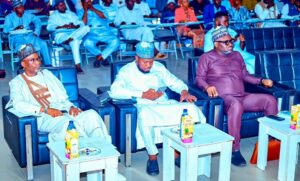
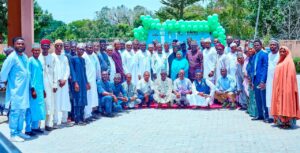
Engr. Mustapha Habu Ringim, the Chief Executive Officer of ENGAUSA Global Tech Hub was selected to serve as the Keynote Speaker at the Kano Solar Dialogue, held on Thursday, 23rd July 2026, and organised by the Centre for Renewable Energy and Sustainability Transition (CREST), Bayero University, Kano (his beloved alma mater), in collaboration with the Secure Energy Project and other development partners, including GIFSEP, Bridge the Gap, and Solar Power Nigeria.
His keynote, titled “Solar Energy in Nigeria: Balancing Energy Access, Local Manufacturing and Industrial Transformation,” challenged stakeholders to rethink renewable energy not merely as a solution to Nigeria’s electricity deficit, but as a strategic platform for industrialisation, human capital development, local manufacturing, innovation, and economic transformation.
He highlighted the need for policy consistency rather than frequency, competency-based skills development, stronger collaboration among government, academia, and industry, and the establishment of an Innovation-to-Market Ecosystem that transforms Nigerian ideas into globally competitive products. In this context, he discussed India’s remarkable economic transformation, which was catalysed by the introduction of the Liberalisation, Privatisation and Globalisation (LPG) Reforms in 1991. These reforms dismantled excessive government controls, opened the economy to private enterprise and foreign investment, encouraged competition, facilitated technology transfer, and integrated India into the global economy. Rather than weakening domestic industries, the reforms were strategically implemented alongside sustained investments in education, engineering, research, innovation, and industrial capacity. This balanced approach enabled India to emerge as a global leader in information technology, advanced manufacturing, pharmaceuticals, and, increasingly, renewable energy manufacturing.
Ringim noted that Nigeria can draw valuable lessons from this experience by pursuing reforms that encourage private sector participation, attract strategic investments, strengthen local manufacturing, promote technology transfer, and develop globally competitive industries. However, these reforms must be carefully adapted to Nigeria’s unique socio-economic context and supported by long-term policy consistency, human capital development, and deliberate protection of strategic domestic industries during their growth phase. The goal should therefore not be to eliminate imports abruptly but to progressively strengthen domestic manufacturing capacity. Every solar panel, inverter, battery, charge controller, or other renewable energy component produced locally creates jobs, conserves foreign exchange, strengthens engineering capacity, stimulates innovation, and deepens local supply chains.
He also emphasised that achieving a sustainable solar energy future for Nigeria requires a strategic and long-term industrial vision that goes far beyond imposing restrictions on the importation of solar panels or other renewable energy components. While strengthening local manufacturing is essential, it must be pursued through deliberate capacity building rather than protectionism alone. He therefore advocated for the adoption of a National Renewable Energy Industrialisation Roadmap with clearly defined short-, medium-, and long-term objectives. In the short term, priority should be given to expanding renewable energy access, strengthening local assembly, and developing technical skills. The medium term should focus on increasing local manufacturing, research, and technology transfer. The long-term objective should be to position Nigeria as Africa’s leading hub for renewable energy manufacturing, engineering innovation, and clean technology exports. Such a phased and predictable approach would simultaneously expand energy access, build indigenous industrial capacity, attract investment, create quality jobs, and establish Nigeria as a competitive player in the global green economy.
His sincere appreciation goes to the organisers for the invitation and to all participants for the engaging discussions. Together, Nigeria can build a future where renewable energy not only powers homes and businesses but also powers industries, empowers people, and drives sustainable national prosperity.
He closed his message by expressing gratitude to Almighty Allah, “All praise is due to Almighty Allah. 🤲”
Join Us Today!
For more information:
Website: [www.EngausaHub.com.ng]
Contact: Phone: 07038224643 (WhatsApp and Telegram)
 Email: [email protected]