Visual Impairment Is Not a Barrier to Skill: Harnessing Technology for Digital Inclusion and Equitable Opportunities
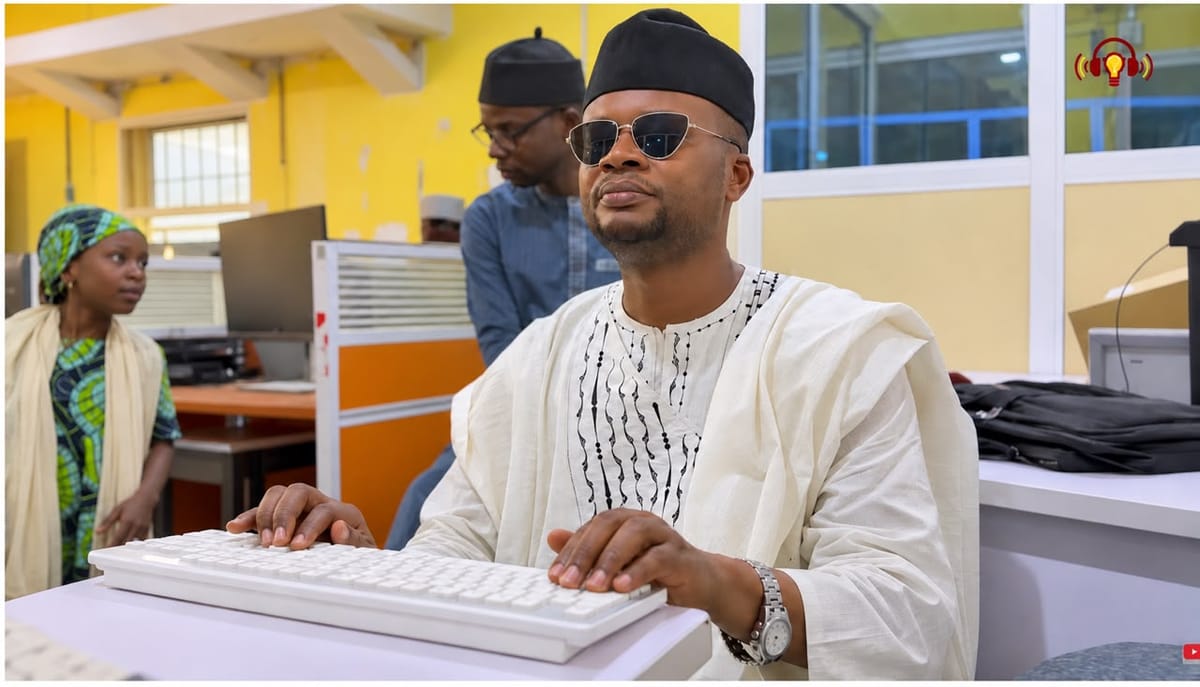
What happens to your dreams when you lose your sight in the middle of your university education? For Abdulrazaq Ado Zango, the answer was not the end of his story, but the start of a different one, built on resilience, assistive technology and the determination to keep learning.
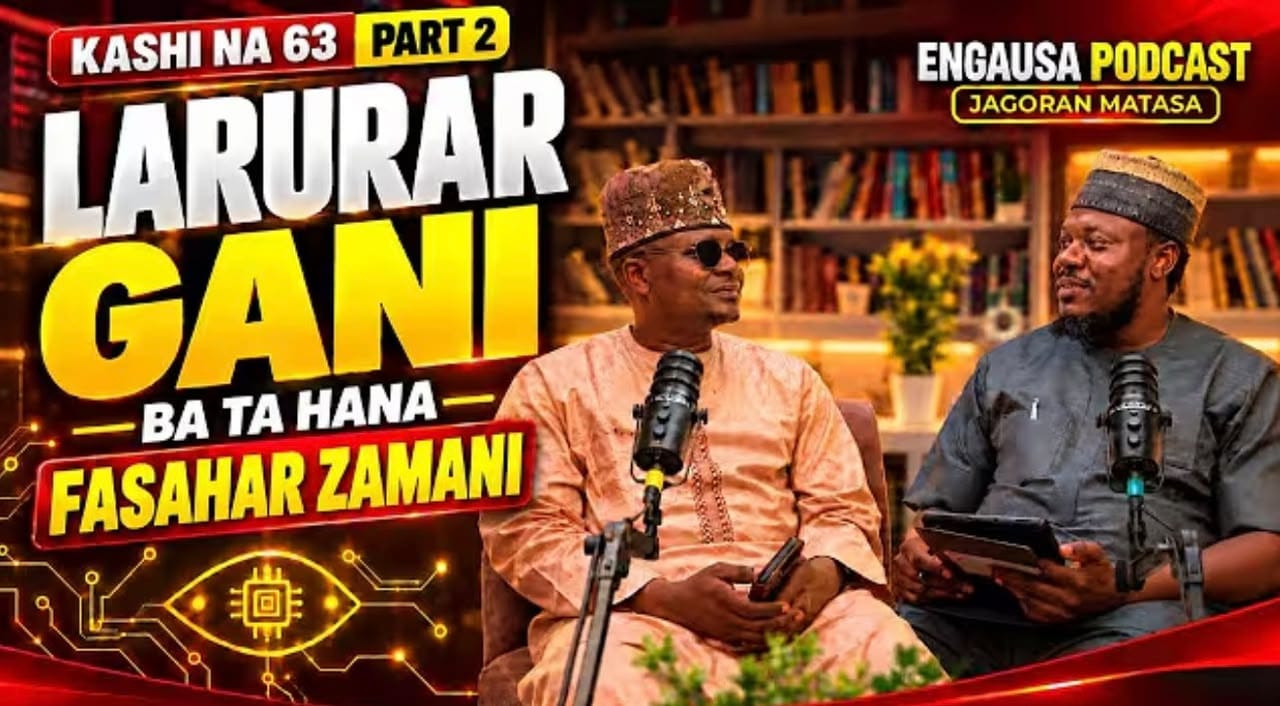
His journey is the heart of Episode 63 of the Engausa Podcast, a three-part series titled "Larurar Gani Ba Ta Hana Fasahar Zamani", which means "Visual Impairment Does Not Prevent Mastering Modern Technology". The series shows how technology, digital skills and an inclusive community can help people with disabilities take their rightful place in the modern economy.
Many people assume that technology depends on sight, with its bright screens, busy layouts and graphic menus. This episode challenges that idea. With the right tools and training, a person who cannot see a screen can still learn to use a computer, work with spreadsheets and succeed in the digital world.
Abdulrazaq's story began with great promise. After completing secondary school in 2005, he gained admission to study Electrical Engineering for the 2005/2006 academic session. He quickly stood out as one of the top students in his department, with big plans for a career in engineering.
Then, between 2007 and 2008, his eyesight began to fail. What started as a gradual decline became a serious medical condition. Despite many hospital visits, consultations and surgeries, he lost his sight and had to leave his engineering programme. It was a painful and abrupt end to the path he had planned.
Losing sight is never only a physical change. In Nigeria, as in many countries, it can come with emotional strain, social stigma and little institutional support. Abdulrazaq spoke openly about this difficult period and about the importance of early medical checks and regular eye screening in communities, since conditions such as glaucoma can cause permanent damage when they are found too late.
The years between 2008 and 2013 were a time of endurance and adjustment. Rather than letting his disability set the limit of what he could do, he chose to adapt. In 2014, he gained admission to study Early Childhood Education, returning to university and proving that an interruption does not have to be the end.
He also began helping others on the same road. Around 2018, he took part in grassroots efforts to support persons with special needs, offering guidance, links to rehabilitation and mentorship to people trying to regain their independence.
Technology was the turning point. In the past, education for people with visual impairments depended mainly on specialized schools and Braille on paper. Braille laid a strong foundation for reading and learning, but Braille books are bulky and few, and many materials were never translated, which limited how far learners could go.
Today, the picture is very different. Accessibility tools are now built into the everyday devices people already use. Microsoft Narrator on Windows computers, VoiceOver on Apple devices and TalkBack on Android phones all read out what is on the screen, so a user can listen and navigate by touch or keyboard. With these tools, visually impaired professionals work with Microsoft Excel, write and format documents, browse the internet and carry out research on their own.
Artificial intelligence is adding even more. Text-to-speech, translation and AI-powered writing and research tools help users handle complex documents and tasks without depending on a sighted helper. As Abdulrazaq's own experience shows, being blind does not mean being unable to think, analyze or work. It means finding a different way in, and the right tools make that possible.
Still, technology alone is not enough. Abdulrazaq described the barriers that remain in higher education, including inaccessible libraries, inflexible examination formats, and online learning platforms that are not designed with accessibility in mind. He also highlighted a more fundamental challenge: educational curricula and occupational standards that fail to prioritise inclusivity from the outset, treating it as an afterthought rather than an essential principle guiding their design, development and implementation. Furthermore, he pointed to the high cost of assistive technologies and specialised software, alongside limited public awareness, as persistent obstacles that exclude talented individuals from equitable opportunities to acquire skills, demonstrate competence and participate meaningfully in education and employment.
The conversation also looked at the legal side of inclusion. It referred to the UN Convention on the Rights of Persons with Disabilities, Nigeria's Discrimination Against Persons with Disabilities (Prohibition) Act, and the National Commission for Persons with Disabilities, the federal body responsible for protecting disability rights. Laws matter, but they only work when they are enforced and when attitudes change with them.
Abdulrazaq reinforced the guiding message of the disability rights movement:
"Nothing about us without us."
It is a reminder that people with disabilities must take part in designing the curricula, software and public spaces that affect their lives, and that inclusion should also cover learners with both physical and non-physical special needs, such as Autism, Attention Deficit Hyperactivity Disorder (ADHD) etc.
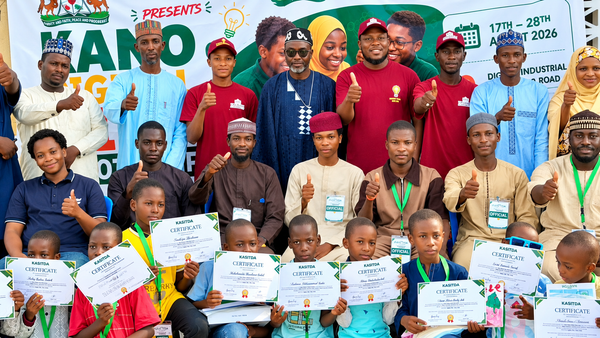
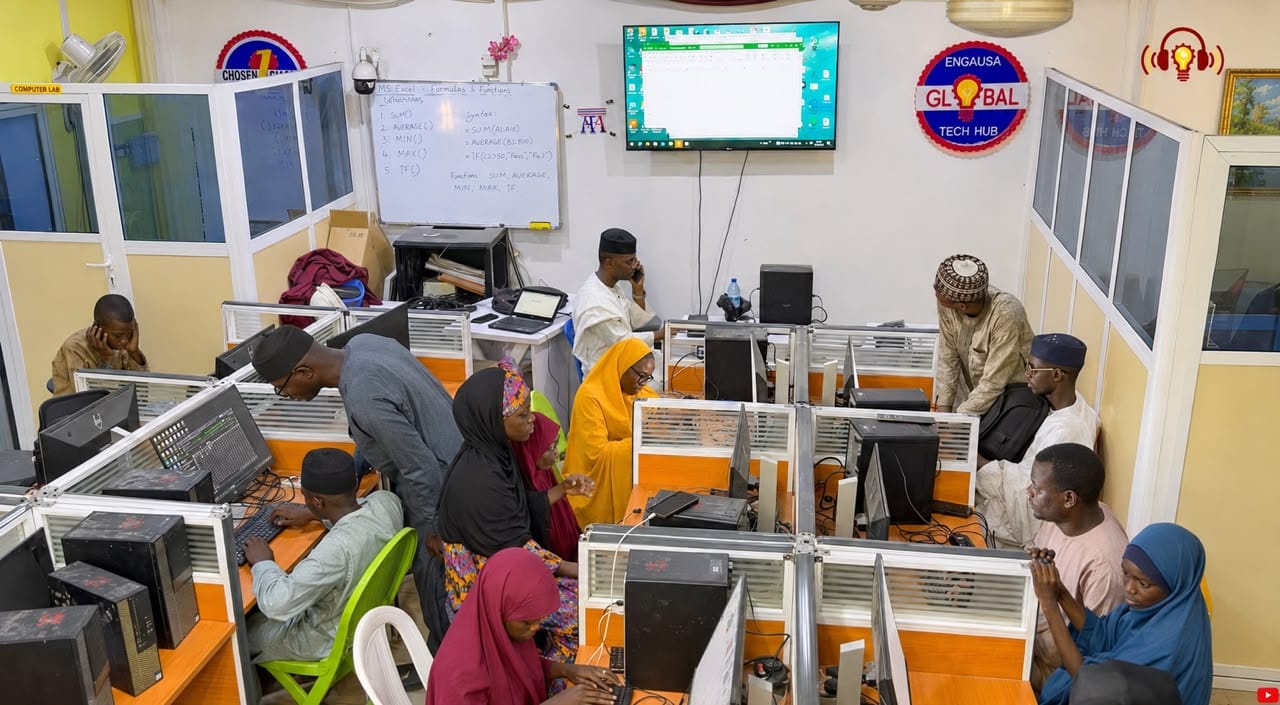
This is where ENGAUSA Skills Development Foundation comes in. Founded by Engr. Mustapha Habu Ringim, the foundation’s commitment extends beyond breaking language barriers to removing financial barriers to technical and digital skills acquisition. By bringing competent tutors like Abdulrazaq into our Hub and providing appropriate tools and a supportive learning environment, we make learning more accessible. Through this approach, we successfully delivered a model hands-on digital literacy programme for twelve learners with visual impairments over eight consecutive weeks. Each learner received a weekly stipend to help cover transportation and meals, reducing financial obstacles and supporting consistent participation. The programme equipped the graduates with practical skills and paved the way for their educational and career advancement.
However, ENGAUSA's commitment to inclusivity goes far beyond overcoming language barriers. The Hub also strives to dismantle the financial, infrastructural, technological and institutional barriers that prevent persons with disabilities (PWDs) from accessing state-of-the-art facilities, modern equipment and opportunities for acquiring industry-relevant technical and digital skills. It is this commitment that inspired us to invite Abdulrazaq and other competent tutors into the Hub, providing them with the appropriate tools, accessible learning resources and a conducive, supportive environment to share their expertise and empower the vulnerable ones. Through this approach, we seek to ensure that persons with visual impairments are not left behind in the rapidly evolving digital economy, but are instead equipped with the skills, confidence and opportunities to develop their competencies into professional expertise, pursue meaningful employment, participate actively in technological innovation and advance their educational and professional careers.
The Hub's practical courses include CCTV installation, computer networking, electrical wiring and satellite TV setup. Learners can also train in graphic design, photography, video editing, web design and blogging, as well as digital marketing, electronics, software development and the use of artificial intelligence tools. Each course is an iclusive route to a job, a business or a more independent life.
The lessons from Episode 63 are clear. Accessibility should be a standard feature of technology, not an optional extra. Skill comes from logic, problem-solving and the ability to adapt, not from sight alone. Families, schools, software developers and community leaders all have a part in creating the support that lets people with disabilities flourish.
Above all, the series reminds us that when society replaces exclusion with accessible tools, fair policies and practical training, people with disabilities become active contributors to the digital economy.
This is the heart of ENGAUSA's motto, "Breaking Barriers and Bridging Gaps". It means making sure that every learner, whatever their background or ability, has a chance to take part in the digital world.
Watch the full series on ENGAUSA Hub TV to hear the story in Abdulrazaq's own words.
ENGAUSA®, breaking barriers and bridging gaps, for every learner.
For more information: Websites:
Phone: +234 802 462 1310 (WhatsApp and Telegram) Email: [email protected]
Office Address: Unit 35/36 Technology Incubation Center, Adjacent to KASCO, Guda Abdullahi Road, Farmcenter Tarauni, Kano Nigeria 🇳🇬